






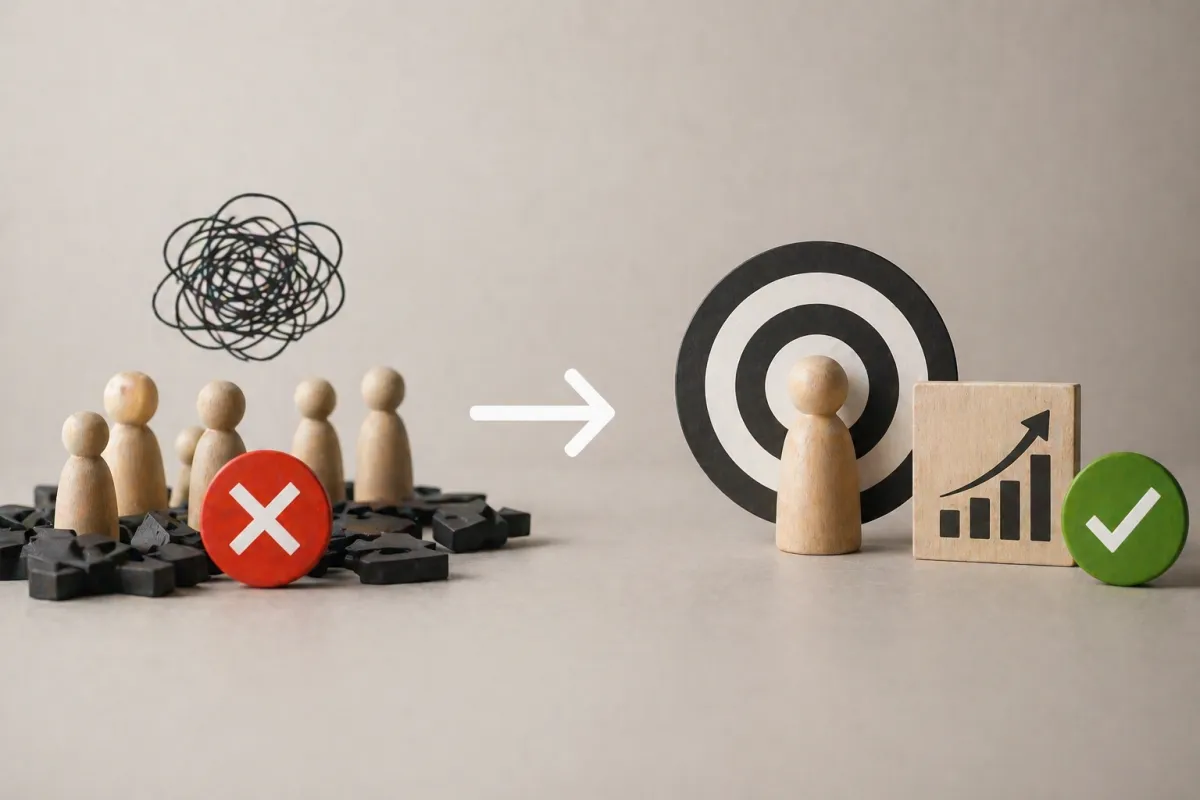
Avoid Repetitive Mistakes and Improve Results in Your Agency
Working a lot does not always mean moving forward
There are tourism businesses that work a lot and, even so, feel that they are not moving forward. They have meetings, clients, campaigns, messages, quotes and a thousand open tasks. But when the months go by, the feeling is uncomfortable: the same problems keep appearing.
This does not usually happen because of lack of effort. It happens because of lack of review. Many entrepreneurs are so involved in the day-to-day that they do not stop to look at what is really happening. And without review, the business repeats mistakes.
The phrase “this month I will do better” is useless if there is no system to learn from what happened. Improvement does not appear by intention. It appears through analysis and adjustment.
The invisible cycle that slows growth
The pattern is usually the same. A campaign is launched, leads are received, conversations are handled, some sales are closed and the business moves on. But no one calmly reviews what worked, what failed and what should change.
As a result, an unprofitable campaign can be repeated. A message that attracts bad leads can remain active. A weak follow-up process can be maintained for months. And a problematic type of client can continue entering because no one has stopped to detect the pattern.
The problem is not making mistakes. That is part of business. The problem is making the same mistakes without learning from them.
What happens when you do not review
When an agency does not review its actions, it loses control. It begins to make decisions based on feelings: “I think this campaign went well,” “it seems to me that these leads are bad,” “maybe the problem is the price.” But feelings are not enough.
Without data, it is easy to blame the market, the algorithm, the client or the competition. But many times the problem is inside: in the message, in the offer, in the follow-up or in the lack of filter.
In addition, not reviewing creates wear and tear. Because the entrepreneur feels that they are working more and more, but does not understand why they are not improving.
The minimum metrics you should control
You do not need a complex dashboard to start. You need three or four basic pieces of data reviewed every week.
- Number of leads received.
- Origin of those leads.
- How many moved forward to a real conversation.
- How many requested a proposal.
- How many ended up buying.
With just this you can start seeing patterns. Maybe one channel brings many leads but few clients. Maybe another brings less volume but more quality. Maybe the problem is not in acquisition, but in follow-up.
The weekly review as a management habit
A weekly review does not have to be long. It can last thirty minutes. But it must exist. The key is to set aside a moment to look at the business from the outside, not just live inside it.
In that review you should answer simple questions:
- What worked this week?
- What did not work?
- What should we repeat?
- What should we eliminate?
- What are we going to adjust before next week?
The important thing is not looking at data just to look at it. The important thing is making decisions.
The real value of correcting quickly
The businesses that improve are not the ones that never fail. They are the ones that fail, detect quickly and adjust before the others. That is a huge advantage in tourism, where many agencies repeat strategies that are not working for months.
When you introduce constant review, you stop living on autopilot. You start directing. And directing means deciding with information.
The key idea is simple: the business does not improve by itself. It improves when it is analyzed. If you want to stop repeating mistakes, stop moving forward blindly and start reviewing with discipline.