






The Client That Made Him Rethink Everything
At first it seemed like a good opportunity
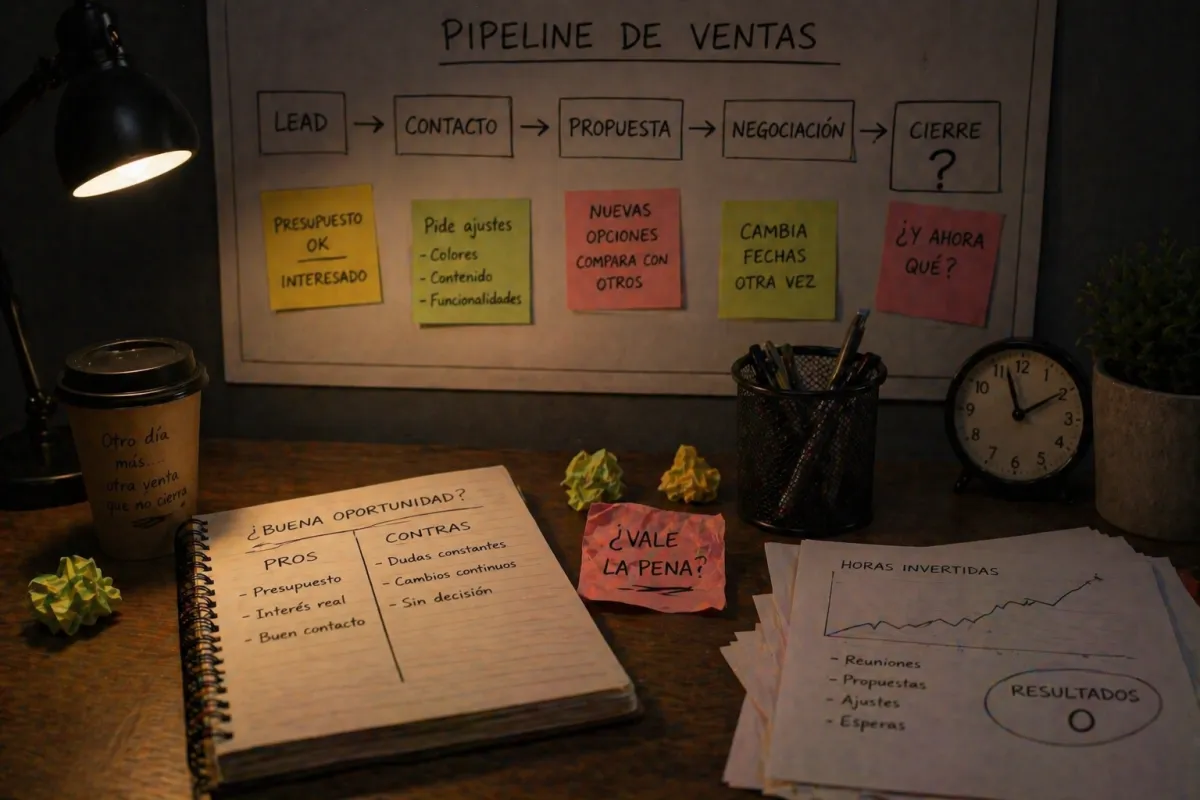
Marcos received a lead that, apparently, was one of the good ones. The person was polite, had a budget, knew more or less what they wanted, and seemed interested in moving forward. Everything indicated that it could become a good sale.
But as the days went by, something began to change. First they asked for small adjustments. Then new options. Then they compared with other proposals. Later they changed dates again. Each conversation seemed to move forward a little, but never enough.
Marcos did not see it at the beginning. No one sees it at the beginning. Because when you have a possible sale in front of you, it is hard to accept that perhaps that opportunity does not compensate.
The invisible wear and tear
For several weeks, Marcos dedicated time to that client. Meetings, messages, quote changes, new alternatives and explanations. The client was not unpleasant. That was precisely the problem: they did not seem like a bad client.
But they consumed energy. A lot.
In a NeuroHUB review, when going over his week, Marcos said something that caught our attention: “I have worked a lot, but I feel like I am not closing anything.” When we looked in detail, a large part of his energy had gone into a single conversation that never quite decided.
The question that changed the focus
I asked him: “If this client closed today, would you want another one just like them?”
He did not answer quickly. And that already said a lot.
Then he said: “Honestly, no.”
Then came the uncomfortable question: “Why are you still dedicating so much time to them?”
Silence.
What was behind it
The problem was not only that client. It was the lack of limits in the process. Marcos did not have a clear criterion to decide when to continue, when to pause, and when to let go of an opportunity.
Like many entrepreneurs, he confused opportunity with obligation. If someone showed interest, he felt he had to continue until the end. But not every contact deserves the same level of energy.
In tourism, this is especially dangerous because a proposal can consume a lot of time before generating money.
What was adjusted
It was not about becoming cold or treating anyone worse. It was about organizing the process.
- Define filtering questions before preparing complex proposals.
- Set a reasonable number of included adjustments.
- Mark clear next steps after each conversation.
- Detect signs of low decision.
- Learn to close conversations that do not move forward.
The emotional change
The most important thing was not the procedure. It was the permission Marcos gave himself to choose. He understood that saying no to certain processes is also taking care of the business.
From there, his energy changed. Less anxiety about pleasing everyone. More clarity to detect who truly fit.
The lesson of the day
Not all clients add value. Some teach you what you must stop accepting.
An agency grows better when it learns to choose. Because the entrepreneur’s time is also a resource. And if you give it away without criteria, you end up full of activity, but empty of progress.
What was not said out loud
Marcos admitted something that many entrepreneurs feel, but do not always dare to say: he had continued with that client out of fear of losing the sale. Not because he believed it was the best opportunity, but because he had already invested too much time to let it go.
That is one of the most common traps in any service business. The more time you have dedicated to an opportunity, the harder it is to accept that perhaps it was not a good one. But continuing only because of what has already been invested can become even more expensive.
From that day on, Marcos began to look at his conversations differently. He no longer asked only “can they buy?”, but also “is this process worth it?”. That difference changed the way he sold and also the way he protected his energy.